
Vitamins & Daily Energy
Vitamin D and the Rhythm of the Active Man's Morning
Marcus Webb · 10 February 2026
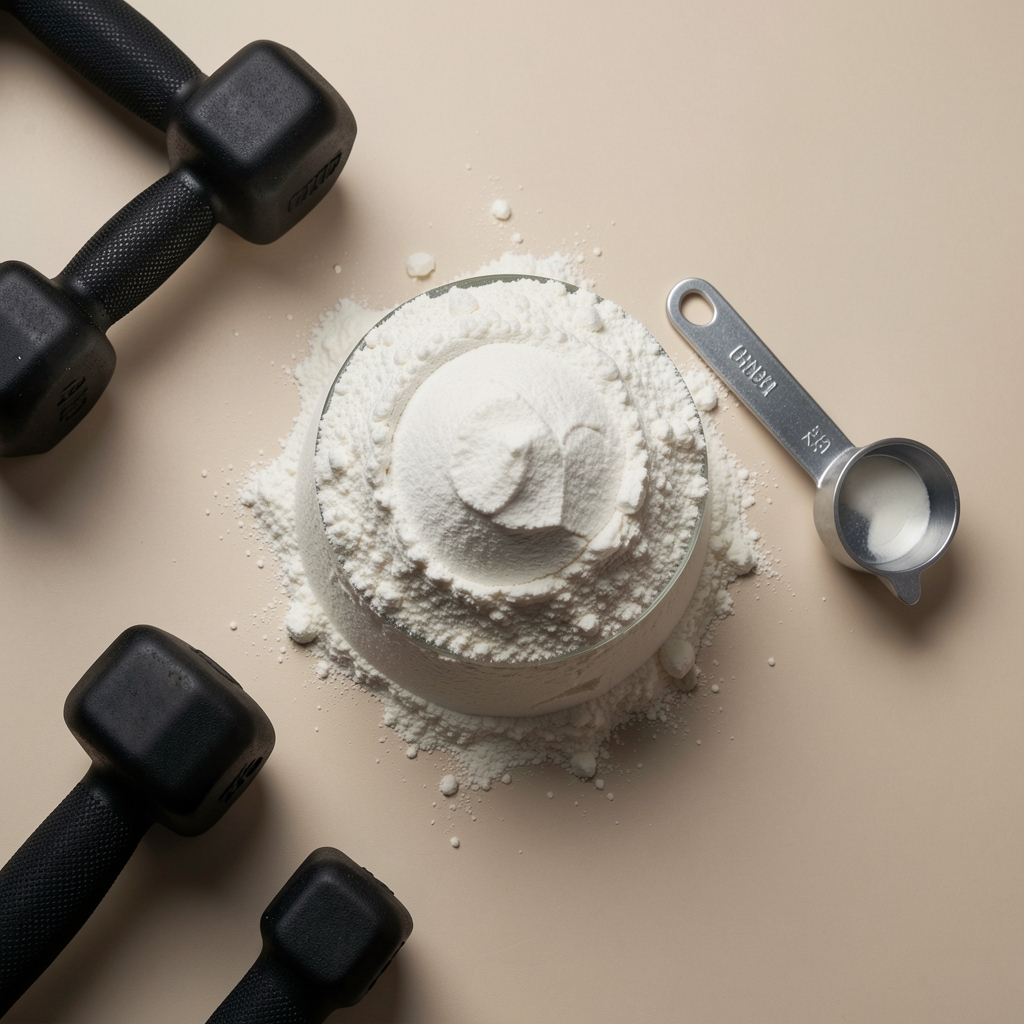
Of all the supplements that appear in the daily stacks of active men in Indonesia, creatine carries the most well-documented research trail. It is not the most glamorous addition to a morning routine, nor the most visible. But it is, by some measure, the most consistently examined in the published nutritional and sports science literature over the past three decades.
The supplementation landscape for men tends to organise itself around two impulses: the desire to support physical output and the desire to support recovery. Most nutrients serve one or the other more clearly. Creatine occupies a distinct position because the published research on it has focused almost exclusively on its role in supporting physical output over time in resistance training routines — and the volume and consistency of that literature is unusual in a field where many supplement claims outpace the evidence behind them.
Creatine monohydrate — the most widely studied form — has been examined in hundreds of peer-reviewed studies across multiple decades and populations. The findings, while variable in their specifics, converge on a coherent observation: regular creatine supplementation, when combined with resistance training, is associated with measurable differences in physical output capacity over training periods typically measured in weeks rather than days. This is not a claim about any single session; it is an observation about the direction of change over a sustained period of consistent supplementation and training.
For the editorial record, it is worth noting what the research does not uniformly claim. Individual variation in creatine response is well-documented. Approximately 25 to 30 percent of research participants in published trials are categorised as non-responders — individuals who show minimal observable change in physical output markers despite consistent supplementation. The reasons for this variation are not fully understood, but dietary baseline (those with higher habitual meat intake tend to have higher baseline creatine levels) is among the factors discussed in the literature.
One of the more actively debated aspects of creatine supplementation in the published literature is whether a loading phase — typically defined as a higher daily intake for the first five to seven days before dropping to a maintenance amount — produces meaningfully different outcomes compared to consistent lower daily intake from the start.
The research evidence here is nuanced. A loading approach does appear to saturate muscle stores more rapidly than a steady low intake, with most studies observing meaningful saturation within the first week for those who load. However, the same saturation level is generally observed after approximately three to four weeks of consistent lower daily intake without loading. The long-term physical output outcomes between the two approaches are not meaningfully different in most published comparisons.
For men in Jakarta who are building a consistent supplement routine around a demanding work and training schedule, this distinction has practical implications. The loading approach requires a more deliberate short-term intake adjustment. The steady approach is simpler to maintain alongside the rest of a daily stack. Neither is universally superior. The choice belongs to the individual, ideally with input from a qualified wellness professional who understands their specific routine.
"Creatine does not announce itself the way that protein powder does. Its contribution to physical output over time is gradual, observable only over weeks — which is precisely why consistency is the distinguishing habit among those who see the most meaningful shifts."
A consistent thread across multiple studies on creatine supplementation is the importance of adequate hydration. Creatine draws water into muscle cells as part of its mechanism of action in the body. This is not a reason for concern — the process is part of how muscle stores of creatine become saturated — but it does have a practical implication for men in a tropical climate like Jakarta, where ambient heat increases baseline hydration demands.
Several published research reviews on creatine supplementation in warm-climate populations have noted that adequate daily water intake is particularly important for men who train in heated environments. The editorial note here is not alarmist — creatine is one of the most safety-reviewed supplements in the published literature — but it is worth maintaining awareness of how hydration patterns interact with the supplement stack in a hot-weather context.
Men who track their supplement routines consistently tend to pair creatine with a hydration habit rather than regarding them separately. This pairing — noting water intake alongside supplement intake in a daily log — is a small observational practice with meaningful downstream consistency benefits.

Among men who use both protein powder and creatine in their daily supplement stack, a common editorial observation is the tendency to regard creatine as secondary — an addendum to the protein-centred narrative. The published research does not particularly support this hierarchy. The two supplements operate through distinct mechanisms and serve different nutritional roles.
Protein supplementation supports daily protein intake targets alongside whole foods, contributing to the nutritional environment in which muscle tissue is built and maintained over time. Creatine supports physical output over time in resistance training routines — a contribution that is meaningful but operates on a different axis from protein intake. Understanding this distinction helps men position both supplements accurately in a daily stack rather than regarding one as a qualifier for the other.
The practical upshot is straightforward: both can coexist in the same daily routine without meaningful interference. Taking creatine at the same time as protein powder is a common practice that the research literature does not identify as problematic. The more important consideration is consistency of intake — creatine's effects accumulate over time, and irregular supplementation reduces the reliability of the output pattern documented in the research.
A complete editorial survey of creatine and physical output benefits from noting the nutrient context in which creatine supplementation typically occurs. Men who train consistently and supplement with creatine are also managing energy demands that draw on the broader nutritional architecture: B vitamins contribute to daily focus and energy awareness; zinc contributes to nutritional balance in active men's routines; magnesium supports muscle recovery rhythm after physical activity.
None of these nutrients are interchangeable with creatine or with protein. Each occupies its own functional position. But together they represent a nutritional stack that addresses several distinct aspects of the active man's daily energy and recovery patterns. The published literature on each is robust enough to support their inclusion in a thoughtful daily supplement routine, and their collective contribution to the overall stack is arguably greater than any single item in isolation.

Marcus Webb is the primary editor of Oraniv Journal. His editorial work focuses on the intersection of supplementation habits, nutritional awareness, and active lifestyle choices for men. Based in Jakarta, he draws on published nutritional research and observational notes to produce evidence-informed editorial content.
More from Marcus Webb →